Zoho CRM is one of the most affordable customer relationship management platforms in 2025, offering enterprise-level CRM features at pricing suitable for startups, SMBs, and growing companies.
Designed for scalability and value, Zoho CRM combines sales automation, deep customization, and cloud flexibility, making it a top alternative to expensive enterprise CRM software.
Zoho CRM has built a strong reputation in the global CRM market because it delivers premium-grade features without premium pricing. As part of the Zoho ecosystem, the platform integrates natively with 50+ Zoho applications, enabling businesses to manage sales, marketing, customer service, finance, and operations through a single connected system. This all-in-one approach makes Zoho CRM a reliable choice for organizations seeking sustainable growth in 2025.
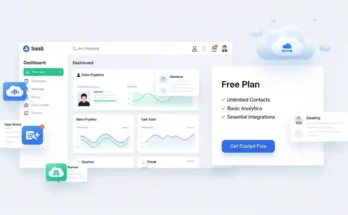
One of the biggest strengths of Zoho CRM is its affordability strategy. With entry-level pricing, flexible subscription tiers, and even a free CRM plan for small teams, it reduces financial barriers for companies that want professional CRM adoption. This affordability, paired with automation and customization, makes Zoho CRM highly attractive for cost-conscious businesses.
Zoho CRM is also designed to grow with business needs. Whether a company needs basic lead tracking or advanced workflow automation and AI analytics, Zoho CRM scales without forcing organizations into extremely expensive upgrades. This balance between functionality and cost efficiency is the reason Zoho CRM remains one of the most competitive CRM software platforms in 2025.
What Is Zoho CRM?
Zoho CRM is a cloud-based customer relationship management platform that acts as a central hub for leads, contacts, deals, and customer interactions. It supports businesses across industries and offers flexible configuration options to match unique sales pipelines and operational workflows.
Unlike CRM platforms that focus only on sales, Zoho CRM connects with marketing automation, customer support, accounting, inventory, and project management tools inside the Zoho suite. This creates a unified ecosystem where data flows smoothly between departments, improving collaboration, reporting accuracy, and decision-making.
Zoho CRM uses a modular structure that lets businesses start small with essential CRM features and expand capabilities gradually as business requirements grow. This approach helps teams control costs while still keeping access to advanced tools when needed.
Because it is fully cloud-based, Zoho CRM provides secure access from anywhere. Its mobile CRM apps allow teams to manage deals, contacts, and communication while traveling, in meetings, or working remotely.
Key Features of Zoho CRM in 2025
Lead and Contact Management
Zoho CRM offers strong lead and contact management tools that capture data from websites, email marketing, social channels, and web forms. Each contact record stores interaction history, making customer engagement more personalized and effective.
Sales Pipeline Management
Zoho CRM provides visual pipeline tracking with customizable stages. Drag-and-drop deal movement makes it easy to update progress, while forecasting tools help teams predict revenue and identify pipeline risks early.
Workflow Automation
Advanced workflow automation reduces repetitive manual tasks by automating lead assignment, follow-ups, reminders, task creation, and record updates. These sales automation tools improve consistency and reduce delays in the sales cycle.
Zia AI Assistant
Zia is Zoho CRM’s AI assistant that provides predictive insights, deal forecasting, anomaly detection, and smart recommendations. It helps sales teams prioritize high-probability deals and optimize sales performance using data.
Customization with Canvas Builder
Canvas Builder allows deep CRM customization without coding. Companies can design custom layouts, modules, and interface views based on their internal processes, making Zoho CRM one of the most flexible CRM platforms available.
Multi-Channel Communication
Zoho CRM supports email, phone calls, social media messaging, and live chat inside one interface. This ensures teams have complete customer conversation visibility and better communication control across touchpoints.
Blueprint Process Management
Zoho Blueprint helps businesses define step-by-step sales processes with validation rules, approvals, and structured workflows. It ensures consistent execution in complex deal management environments.
Analytics and Reporting
Zoho CRM includes advanced reporting dashboards and analytics tools that provide insights into sales activity, team performance, customer behavior, and business trends. Custom dashboards support data-driven decision-making.
Use Cases of Zoho CRM in Real Businesses
Small businesses use Zoho CRM to build structured lead handling and sales processes without investing in costly enterprise CRM tools. As the business grows, they add more Zoho integrations and automation.
Manufacturing companies rely on Zoho CRM for managing long B2B deal cycles, quotation approvals, and multi-layer sales operations. Many integrate it with inventory and accounting apps to maintain complete operational flow.
Consulting firms and service-based businesses use Zoho CRM to manage clients, proposals, contracts, and billing workflows. Sales activities remain connected to revenue tracking and project operations.
Real estate businesses customize Zoho CRM to manage property listings, buyer preferences, follow-up automation, and agent pipelines, improving deal speed and customer handling.
E-commerce businesses integrate Zoho CRM to monitor customer behavior, manage support tickets, and improve retention through personalized engagement and automation workflows.
Non-profit organizations use Zoho CRM for donor management, fundraising, campaigns, and volunteer coordination, benefiting from its pricing flexibility and customization strength.
Pros and Cons of Zoho CRM
Pros
Zoho CRM offers enterprise-grade tools at budget-friendly pricing, delivering strong value for growing businesses. It provides deep customization, a huge integration ecosystem, and AI-powered insights that make it powerful for scaling teams.
Its scalable pricing prevents sudden cost jumps, while mobile CRM support improves productivity for teams working from multiple locations.
Cons
Zoho CRM’s feature depth can feel overwhelming for new users, especially during early adoption. Full configuration and customization require planning, setup time, and training to get maximum benefit.
In some cases, customer support speed and overall UI consistency may not match premium enterprise platforms, particularly for very large organizations.
Final Verdict: Is Zoho CRM Worth It in 2025?
Zoho CRM remains one of the most cost-effective CRM software investments in 2025, offering advanced features without premium pricing. It is best suited for startups, SMBs, and mid-sized businesses that need flexibility, automation, and scalability within a controlled budget.
Companies willing to invest time in setup and training will benefit greatly from Zoho CRM’s customization power and connected ecosystem. While it may not always feel as polished as top enterprise CRMs, it compensates with affordability and feature depth.
For businesses focused on long-term ROI, scalable CRM growth, and cost efficiency, Zoho CRM is still one of the smartest customer relationship management platforms available in today’s SaaS market.